
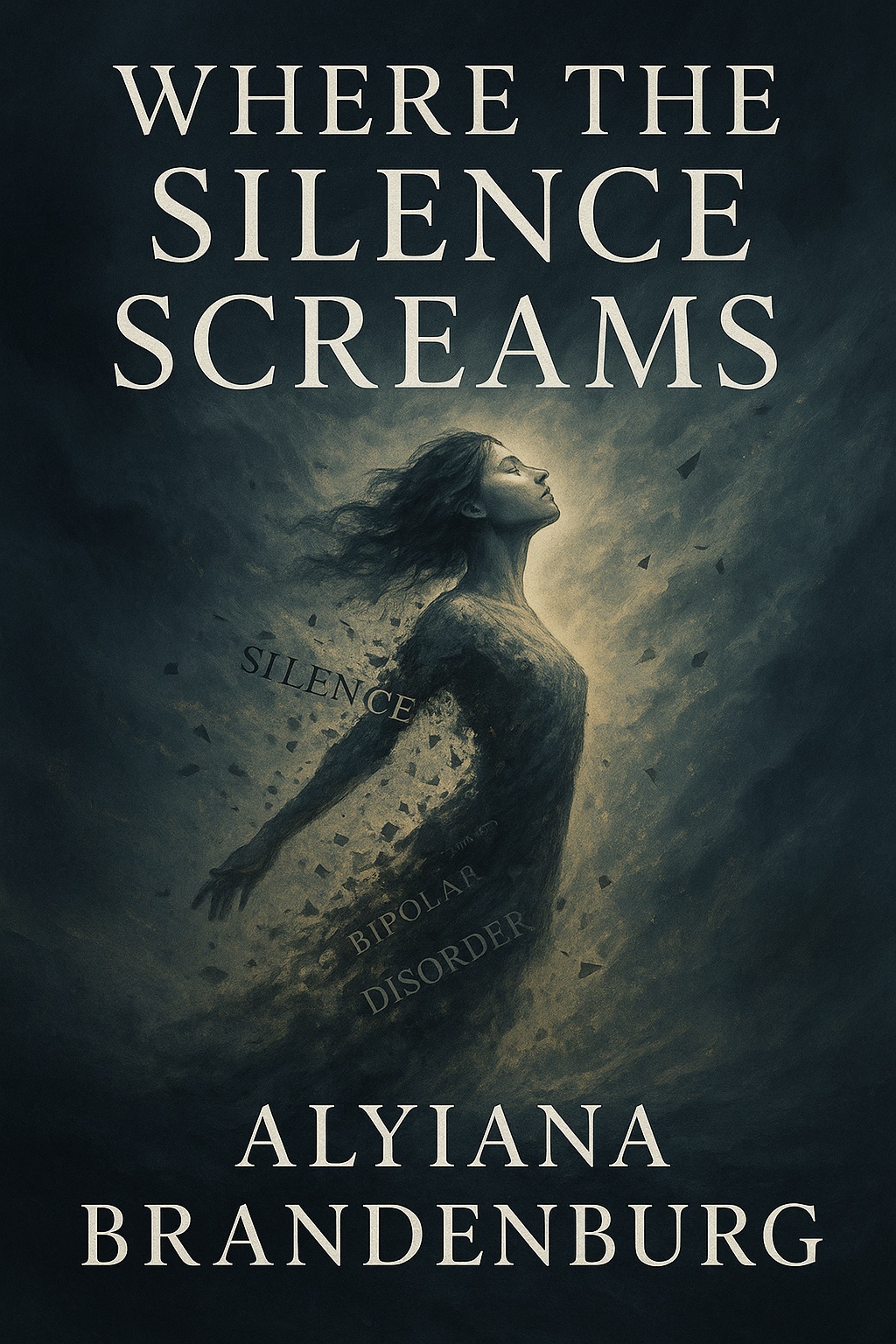
There were days when I felt everything—loud, bright, electric—and others when I felt absolutely nothing, like I’d vanished into thin air while my body moved on without me.
No one prepares you for that kind of duality. No one teaches you how to live in a body that swings between extremes like a pendulum on fire.
Some nights, I’d lie awake for hours, staring at the ceiling as my mind raced with ideas, lists, worries, dreams, obsessions. I’d clean the house at 2 a.m., rearrange my closet three times, start a dozen projects I had no intention of finishing. The energy felt unstoppable, like I was being pulled by invisible strings, puppeteered by something bigger than myself. I laughed too loud at things that weren’t funny. I cried over dog food commercials. Everything inside me was turned up too high—every feeling, every thought, every heartbeat.
And then—nothing.
The crash came softly, like a whisper that slowly smothered me. I would go through the motions—smile when expected, nod when prompted, function enough to pass—but inside, I was hollow. A mannequin in the shape of a person. A silence that wasn’t peace, but absence. An echo chamber with no sound.
That numbness scared me more than the chaos. I could fight the storm, but how do you fight a void? How do you explain that you feel disconnected from your own life, like you’re watching it through glass you can’t break?
People noticed the highs more than the lows. They loved the version of me who was spontaneous and creative, who threw herself into work and projects and parties. They called me passionate. Radiant. Alive. But they didn’t see the after. They didn’t notice when I stopped returning texts. When the fridge went empty. When my eyes stopped lighting up in photos. When my laugh disappeared.
I was everything. I was nothing.
Too much and never enough.
I remember one night standing in front of the mirror, trying to recognize the face looking back. My eyes looked too wide. My skin too pale. I tilted my head, searching for signs of the girl I used to be. But she was gone—or maybe she had never really been there at all.
The mask I wore in public grew heavier with every passing day. I could perform stability for an audience, but in private, I was unraveling. I’d cry on the bathroom floor, then touch up my makeup and head to work. I told myself pretending was easier than explaining, but the truth was I didn’t even know how to explain what was happening. How do you say, “I’m not okay,” when you don’t have the words for what’s broken?
Looking back now, I know what I didn’t know then: this was bipolar disorder. Unnamed, undiagnosed, and merciless.
I wasn’t lazy. I wasn’t dramatic. I wasn’t selfish.
I was sick.
And I needed help.
The illness made me question everything—my worth, my sanity, my future. It convinced me that my emotions were evidence of failure, that my sensitivity was a flaw, that my inconsistency was a burden too big for anyone to carry.
But none of that was true.
I was overwhelmed. I was in pain. I was lost in a storm I didn’t have a name for yet.
And even though I couldn’t see it then, this chapter—this chaos—was not the end.
It was the first clue.
The beginning of something I didn’t know I was allowed to hope for:
Understanding.
Language.
Healing.

Leave a comment