
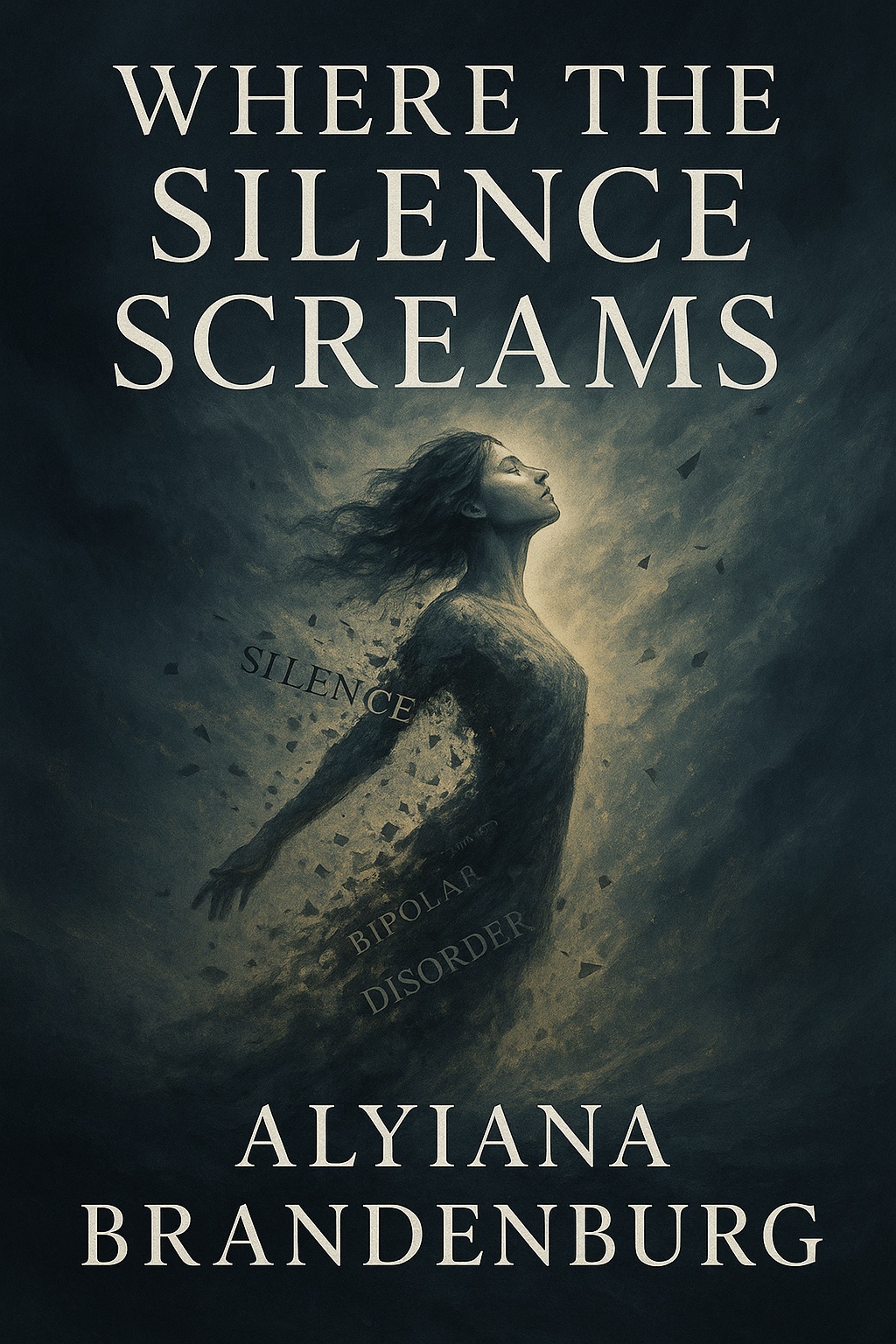
I didn’t walk into the doctor’s office expecting a revelation. I just wanted something—anything—that might stop the unraveling.
By then, everything inside me was slipping loose. My moods were whiplash. My thoughts moved too fast or not at all. I couldn’t sleep for days, then I couldn’t wake up. I lashed out. I cried for no reason. I forgot entire conversations. Work was falling apart. My relationships were fraying. And underneath it all, there was this constant whisper:
You’re losing it.
Still, I hoped for something small. Stress, maybe. Hormones. Anxiety. Something simple, something fixable. Something that didn’t carry a lifetime.
But what she said was:
“Bipolar disorder.”
Two words. Clinical. Precise. Unceremonious.
And yet they landed like an earthquake.
She said them like a fact. I heard them like a sentence. The syllables rang in my ears as she kept talking—symptoms, treatment plans, next steps. I nodded, but I wasn’t really in the room anymore. I was floating above it, watching a version of myself absorb the news like a stranger.
Bipolar disorder.
A name.
A label.
A story I didn’t know I was already living.
At first, I didn’t feel relief. I felt confirmed. You really are broken, the voice inside me hissed.
I left the office with a pamphlet, a prescription, and a new identity I didn’t ask for.
And what followed wasn’t clarity. It was grief.
Grief for the version of me who had hoped this was something temporary.
Grief for the girl who had begged God to make her “normal.”
Grief for the years spent misunderstood, punished, labeled difficult, dramatic, unstable—when all along, I had been ill.
There was shame, too. The kind that creeps into your bones and makes you question your worth. Would people treat me differently now? Would I still be lovable? Could I ever be trusted again—with myself, with others, with a future?
But beneath the grief and shame, something else began to flicker:
Recognition.
All the chaos suddenly had a container. The racing thoughts. The black holes. The strange alchemy of feeling invincible one day and invisible the next. It wasn’t imagined. It wasn’t a personal failure.
It was a disorder.
A real thing. A diagnosable, treatable, explainable thing.
I didn’t know then how complex that diagnosis would become. I didn’t know that accepting it would be a process, not a moment. That I’d spend months denying it, researching alternatives, praying they’d gotten it wrong. That I’d rewrite the diagnosis in my head a thousand times just to avoid living with it in truth.
Because bipolar disorder is more than a word.
It’s a doorway.
And walking through it means everything changes—even the parts you wanted to keep.
But slowly, I began to see that the diagnosis wasn’t a verdict.
It was a mirror.
A signal.
A map.
It said: You are not imagining this.
It said: There is a reason for your suffering.
It said: There is a way forward.
And even though I didn’t have the strength to believe it yet, it also whispered:
This isn’t the end.
It’s the beginning of coming home to yourself.

Leave a comment